Water Damage Mold Restoration in Keller, TX
Water damage and mold are the same job in North Texas — just at different points on the clock. A burst supply line, a failed washing-machine hose, a roof leak after a spring hailstorm: the water gets noticed, the leak gets fixed, and everyone assumes the story is over. But building materials stay damp long after the visible water is gone, and mold starts colonizing damp drywall and wood within a day or two. The leak you fixed last month is the mold you're smelling this month.
That's why your provider handles both sides together: extract and dry the water damage properly, and the mold never gets its foothold. Find mold that started from an old water event, and the drying still has to happen alongside the removal — pulling mold out of materials that are still wet is wasted work. One coordinated plan, one moisture-verified finish.
The pattern local pros see constantly: the emergency gets the attention (the water), and the slow aftermath gets ignored (the damp). If your home has had any significant water event — even one that seemed minor at the time — and you now smell mustiness or see staining, treat it as one connected problem and have it looked at.
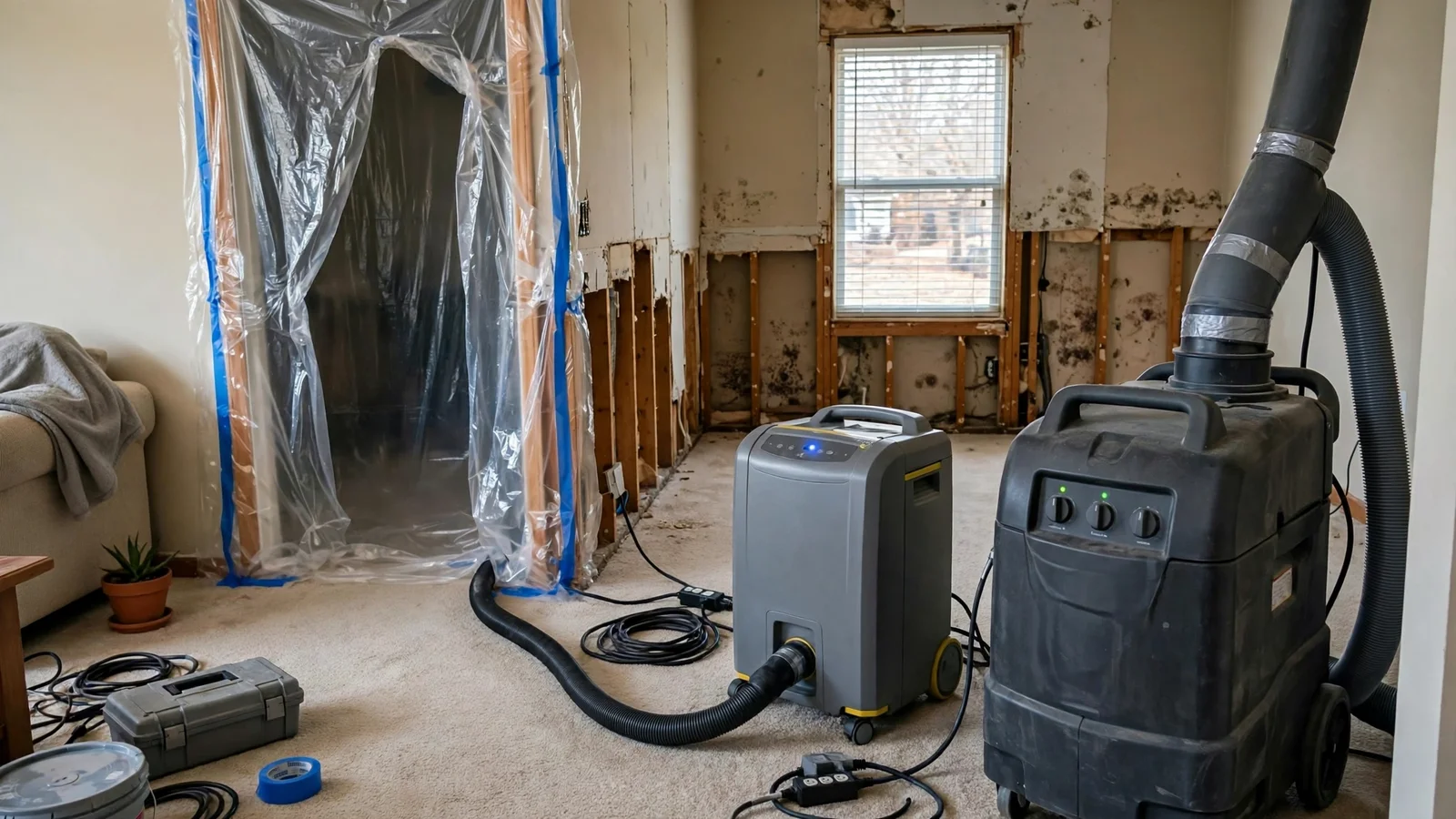
Signs water damage is turning into mold
- Water stains spreading or darkening on ceilings and walls weeks after the leak
- A musty smell that wasn't there before the water event
- Baseboards pulling away from walls, or paint bubbling near the floor
- Flooring that buckles, cups, or feels spongy underfoot
- Damp carpet or pad that never quite dried out
- Visible growth along baseboards or in closets after any flooding
How your provider handles water damage and mold
1. Stop the water, assess the spread
Your provider confirms the source is stopped — coordinating with a plumber or roofer if the original fix needs backup — then maps how far the water traveled with moisture meters. Water runs downhill and sideways inside walls; the visible stain is rarely the full boundary.
2. Extract and dry
Standing water comes out, then the drying phase: air movement and dehumidification targeted at the wet materials, with moisture readings tracked until everything hits dry standards. This is the phase most DIY efforts skip — and the phase that prevents the mold.
3. Contain and remove mold
Any materials where mold has established get the full remediation treatment: containment, removal of unsalvageable porous material, HEPA cleaning of what stays. Your provider won't pull mold out of still-wet material — drying comes first or alongside.
4. Verify dry, plan the rebuild
Moisture readings confirm the structure is dry before containment comes down. Then your provider lays out what the finish repairs involve — drywall, paint, flooring — and whether that's part of their scope or a separate trade. Ask, so there are no surprises.
Water damage and mold in Keller homes
Keller's water-damage script is written by North Texas weather and 1990s construction. Spring brings hail and wind-driven rain that breach roofs; summer brings AC condensate failures in hot attics; year-round, rubber washing-machine hoses and aging water heaters (many sitting in garages) let go without warning. Slab foundations on expansive clay shift and crack supply lines under the floor. Two-story homes multiply the damage — a second-floor bathroom leak rains into the rooms below. Local pros handle these combinations constantly, which is why the good ones treat every water call as a potential mold call from the start.
Need water damage mold restoration in Keller?
One call connects you with a local technician. No forms.
(555) 234-5678📞 Call Now